

Here is the complete, publish-ready blog post:
Gynecomastia in Bahrain: What Men Need to Know About Male Breast Reduction Surgery
The Problem: "I Work Out, I Watch What I Eat — So Why Does My Chest Still Look Like This?"
It is one of the most common frustrations heard from men who walk into a plastic surgeon's clinic. You have been consistent at the gym. You eat well. But no matter how hard you train, your chest refuses to look flat and masculine. Shirts feel awkward. Changing in the locker room at your local sports club is something you dread. Trips to the beach at Amwaj Islands or Durrat Al Bahrain come with a specific kind of anxiety — one that has nothing to do with the sea.
If this sounds familiar, you may not be dealing with ordinary chest fat. You may have gynecomastia — a medical condition involving the growth of actual glandular breast tissue in men. And the critical difference matters: one of the most common misconceptions is that gynecomastia is the same as excess chest fat; while the two can appear similar, they are medically different conditions and require different treatment approaches.
You are not alone, and this is not your fault.
The Answer: What Exactly Is Gynecomastia?
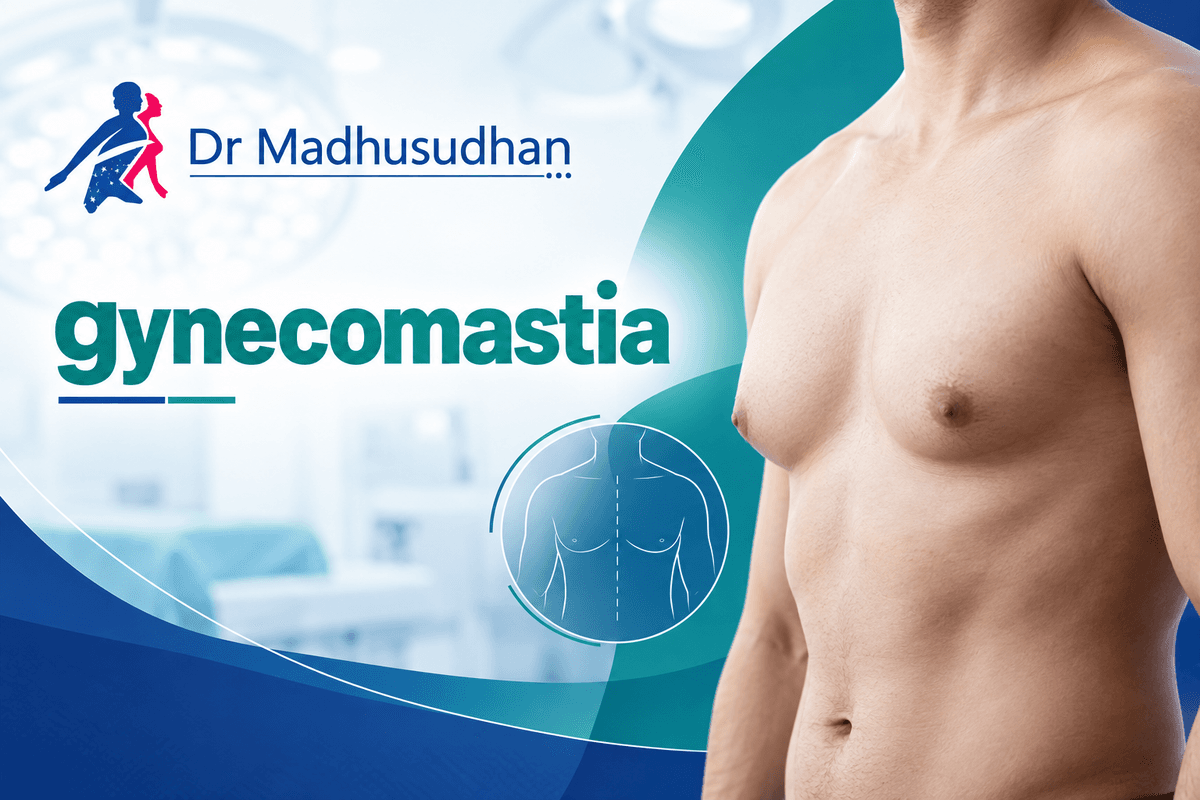
Gynecomastia is the benign enlargement of glandular breast tissue in males. It is not a lifestyle failure — it is a medical condition rooted in hormonal imbalance.
Studies suggest gynecomastia affects between 32% to 65% of males at some point in their lives. Globally, the condition is more frequently seen during specific life stages, such as puberty and older age, when hormonal fluctuations are most pronounced. In adult men, around 30% to 40% of adult men between the ages of 20 and 50 experience gynecomastia due to a variety of factors, including lifestyle choices, health conditions, and medications.
Common triggers include certain medications, anabolic steroids, alcohol, marijuana, illegal drugs, weight gain, and underlying health conditions.
Critically, true gynecomastia does not respond predictably to diet or exercise and often requires surgical intervention for permanent correction. Many men also have a mixed form, with both glandular tissue and excess fat, which often requires a combination of liposuction and gland excision for effective treatment.
The condition also carries a weight that goes far beyond appearance. Psychological consequences associated with gynecomastia include depression, anxiety, disordered eating, body dissatisfaction, and reduced self-esteem. Men may avoid activities that require chest exposure, such as swimming or going to the gym, further isolating themselves socially. In a country like Bahrain, where beach culture, sports, and social life are deeply woven into everyday living, this isolation is a very real cost.
The Solution: Gynecomastia Surgery with Dr. Madhusudhan in Bahrain
At Dr. Madhusudhan's plastic surgery practice in Bahrain, gynecomastia is treated with a personalised, evidence-based surgical approach tailored to every patient's specific grade and anatomy. Men from across Bahrain — including Manama, Riffa, Muharraq, Isa Town, and Sitra — seek his expertise for male breast reduction surgery that delivers lasting, natural-looking results.
How is the procedure performed?
The surgical approach depends on the grade of your gynecomastia:
- Liposuction alone is used when the enlargement is primarily due to fatty tissue, involving small incisions and the removal of excess fat for a sculpted chest contour.
- Glandular excision is performed when firm breast tissue is present beneath the nipple, typically through a small incision around the areola, leaving minimal visible scarring.
- Combined liposuction and excision is the most comprehensive approach, addressing both fat and glandular tissue for optimal chest contouring.
Gynecomastia is typically treated as an outpatient procedure under general anaesthesia. Most patients are surprised by how straightforward the recovery is. The average patient, treated with a combination of liposuction and breast tissue excision, will likely be back to work after a week. Activity restrictions ease gradually, with workouts resuming at four to six weeks, and scars fade significantly within 12 months with proper care.
Every patient at Dr. Madhusudhan's clinic receives a thorough pre-operative evaluation, a discussion of realistic expectations, and a structured post-operative care plan — because the outcome of gynecomastia surgery is only as good as the planning that precedes it.
The Evidence: What the Research Says
The clinical evidence supporting gynecomastia surgery is robust and consistently reassuring.
Gynecomastia surgery boasts a success rate exceeding 90%, with the majority of men expressing high satisfaction with their male breast reduction results. In patient surveys, 88% of patients rated their aesthetic results as "very good" or "good," and nipple sensitivity was rated as "very good" or "good" by 83%.
Post-surgical quality of life improvements are equally compelling. In one study, 83% of patients were comfortable exposing their chest after surgery, compared with just 6% before surgery. Self-assessment data from a 10-year outcomes study revealed that patients reported a good level of overall satisfaction and improvement in self-confidence, with average scores of 9.4 and 9.2 respectively on a 10-point scale.
Overall satisfaction rates across surgical techniques range from 95–98%, with 90–95% of cases showing significant improvement in chest contour, and over 90% of patients experiencing relief from physical discomfort.
Choosing a board-certified, experienced plastic surgeon is the single most important factor in achieving these outcomes. Dr. Madhusudhan brings extensive training and a refined aesthetic sensibility to every male breast reduction procedure performed in Bahrain — prioritising minimal scarring, chest symmetry, and natural masculine contour.
Frequently Asked Questions About Gynecomastia Surgery in Bahrain
1. Can gynecomastia go away on its own without surgery?
In some cases, yes — but not always. While some cases of gynecomastia may resolve on their own, mainly if caused by puberty or medication, persistent gynecomastia often requires surgical intervention for effective treatment. If your enlarged chest has been present for more than two years, or if it causes you physical discomfort or significant emotional distress, waiting is unlikely to help.
2. Will exercise and weight loss fix my gynecomastia?
No — not if you have true gynecomastia. True gynecomastia involves glandular tissue that does not respond to diet or exercise. In many men, both fat and glandular tissue are present, making the chest appear fuller and resistant to change through exercise alone — which explains why some men remain frustrated even after significant weight loss and consistent workouts. A clinical assessment is the only way to know for certain what you are dealing with.
3. Is gynecomastia surgery in Bahrain safe, and what are the risks?
Yes, gynecomastia surgery is a well-established, safe procedure when performed by a qualified plastic surgeon. The surgical revision rate across studies is around 4.8%. Possible risks include temporary changes in nipple sensation, minor bruising and swelling, and in rare cases the need for a minor revision. Most men find any temporary loss of sensation to be insignificant, and sensation returns after a year for most patients. A thorough pre-operative consultation with Dr. Madhusudhan in Bahrain ensures every patient understands their individual risk profile.
4. How long is the recovery after gynecomastia surgery — and when can I get back to the gym in Bahrain?
Recovery is more straightforward than most men expect. Most gynecomastia surgery patients return to light work within one to two weeks, with initial recovery complete by four to six weeks and full, final results visible at three to six months once all swelling has settled. Heavy lifting and chest workouts should usually wait until at least weeks four to six. If you train at a gym in Bahrain — whether in Seef, Adliya, or Juffair — plan on wearing your compression garment consistently during the early weeks and following your surgeon's specific clearance timeline before returning to the weights floor.
5. Is gynecomastia surgery worth it?
For the vast majority of men, yes — unequivocally. Men who undergo gynecomastia surgery typically experience significant improvements in their physical appearance by achieving a flatter, more sculpted chest with a masculine contour. Beyond aesthetics, for many men, the decision to pursue treatment is rooted in mental well-being and quality of life. The ability to wear a fitted shirt without anxiety, to swim freely at Bahrain's beaches, or simply to look in the mirror with confidence — these are outcomes that no amount of gym work can produce when the root cause is glandular.
Always consult a qualified, board-certified plastic surgeon for a proper diagnosis before pursuing any treatment for gynecomastia. Individual results may vary.
Visit Us
Visit Dr Madhusudhan for trusted, compassionate care. We're here for you and your family.
Dr Madhusudhan
Bahrain
Phone: +973 34319900
Website: www.drmadhuplasticsurgeon.com
Google Maps: https://www.google.com/maps/place/?q=place_id:https://g.page/r/Cc5oDXeoIhE_EAE
Email: drmadhuplastic@gmail.com