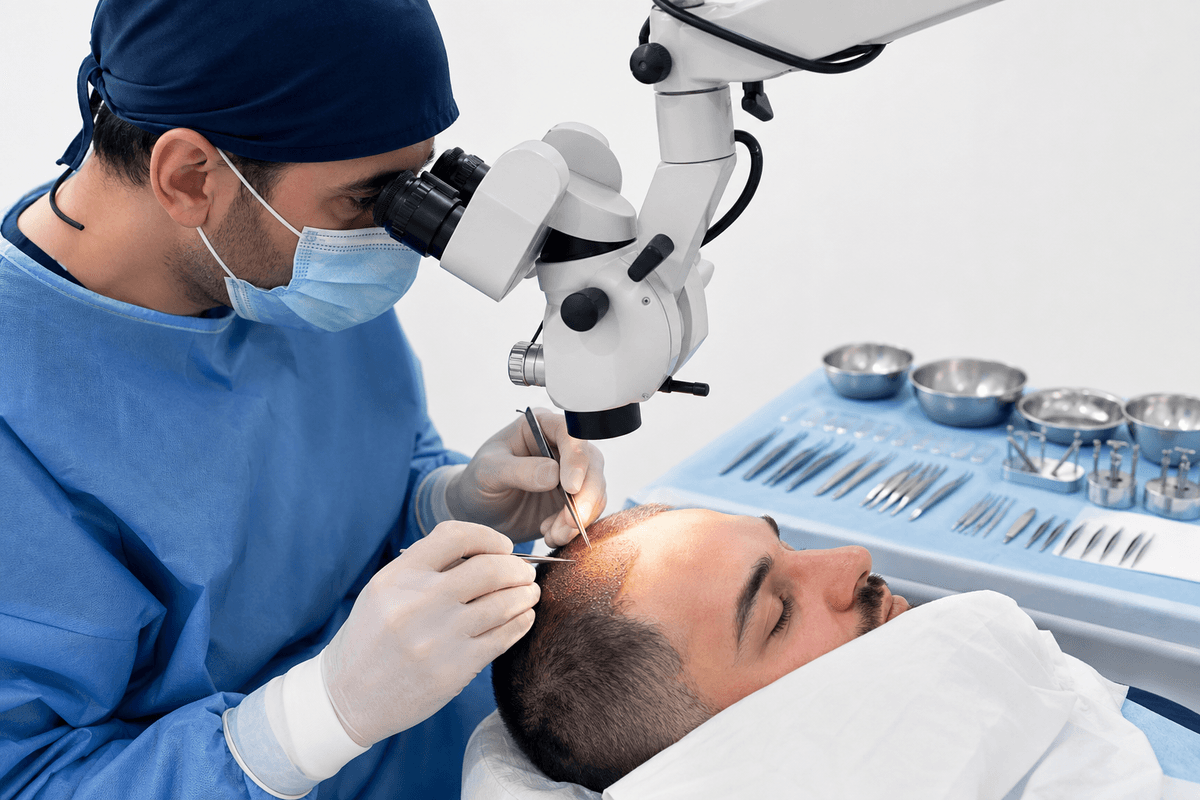
Performed by Dr. M. Madhusudhan at Dr Madhusudhan
Hair Transplantation in Bahrain and Hyderabad offers a permanent solution for hair loss through advanced surgical techniques that relocate healthy hair follicles to thinning or balding areas. The procedure provides natural-looking results with minimal downtime, utilizing state-of-the-art methods to ensure optimal density and aesthetic outcomes. Dr M. Madhusudhan, an experienced Plastic Surgeon, specializes in delivering personalized hair restoration treatments tailored to each patient's unique needs.
We believe in honest, upfront disclosure so you can make an informed decision.
A step-by-step look at what happens during this procedure.
The donor area, typically the back or sides of the scalp where hair is genetically resistant to balding, is trimmed and prepared. Local anaesthesia is administered to ensure patient comfort throughout the extraction process.
Individual hair follicles are carefully extracted using either Follicular Unit Extraction (FUE) or Follicular Unit Transplantation (FUT) technique. FUE involves removing individual follicular units, while FUT involves removing a strip of scalp tissue that is then dissected into grafts.
Extracted follicular units are meticulously examined and prepared under microscopic magnification. Grafts are sorted by size and number of hairs, then stored in a specialized solution to maintain viability until implantation.
Tiny incisions are created in the recipient area following the natural hair growth pattern and angle. The surgeon strategically plans the hairline design and density distribution to achieve the most natural-looking results.
Individual follicular units are carefully implanted into the recipient sites using precision instruments. Single-hair grafts are placed at the hairline for a natural transition, while multi-hair grafts create density in areas behind the hairline.
A structured, patient-first approach from first consultation to full recovery.
Dr Madhusudhan conducts a detailed assessment of your hair loss pattern, donor area quality, and aesthetic goals. He evaluates scalp laxity, hair characteristics, and creates a customized surgical plan including hairline design and graft requirements to achieve optimal natural results.
Using state-of-the-art FUE or FUT methods, Dr Madhusudhan performs meticulous follicle extraction and implantation with attention to angle, direction, and density. His surgical precision ensures maximum graft survival rates and creates natural hair growth patterns that blend seamlessly with existing hair.
Throughout the procedure, Dr Madhusudhan ensures patient comfort through effective local anaesthesia and optional sedation. The surgical team maintains a relaxed environment with breaks as needed, while monitoring vital signs and addressing any concerns during the session.
Dr Madhusudhan provides comprehensive post-operative instructions and medications to optimize healing and graft survival. He schedules follow-up appointments to monitor progress, address concerns, and document hair growth milestones, ensuring you achieve the best possible long-term outcomes.
What to expect at each stage of your recovery journey.
The scalp will show redness, mild swelling, and small scabs at graft sites. Pain is minimal and managed with prescribed medications. Patients should sleep with head elevated, avoid touching the grafts, and follow gentle hair washing instructions provided by the surgical team.
Scabs naturally fall off and transplanted hairs begin to shed, which is a normal part of the process. Swelling completely resolves and most patients return to work and light activities. Avoid strenuous exercise, direct sun exposure, and wear protective headwear when outdoors.
New hair begins growing from transplanted follicles around month three, initially appearing fine and thin. Hair gradually thickens and lengthens over subsequent months with noticeable improvement by six months. Full density and final cosmetic results become apparent between twelve to eighteen months post-procedure.
Patients achieve permanent, natural-looking hair growth that blends seamlessly with existing hair. The transplanted follicles retain their genetic characteristics and continue growing for a lifetime, providing lasting coverage to previously balding or thinning areas.
Restored hairline and increased density significantly improve facial framing and overall appearance. Patients report dramatic boosts in self-confidence, satisfaction with their appearance, and freedom from concerns about visible hair loss or thinning.
Modern techniques like FUE result in tiny, virtually invisible punctate scars in the donor area that are easily concealed by surrounding hair. Even FUT linear scars are typically well-hidden and allow patients to wear various hairstyles without visible evidence of surgery.
Transplanted hair requires no special maintenance beyond normal hair care routines. Hair can be cut, styled, colored, and treated just like natural hair, providing complete versatility and eliminating the need for ongoing hair loss treatments or concealment products.
Let's clear up some of the most common myths about hair transplantation.
Get a personalised assessment from an experienced specialist. Understand your options, ask your questions, and decide with confidence.
Consult M. Madhusudhan for Hair Transplantation at any of these 2 centres — pick the one nearest you.