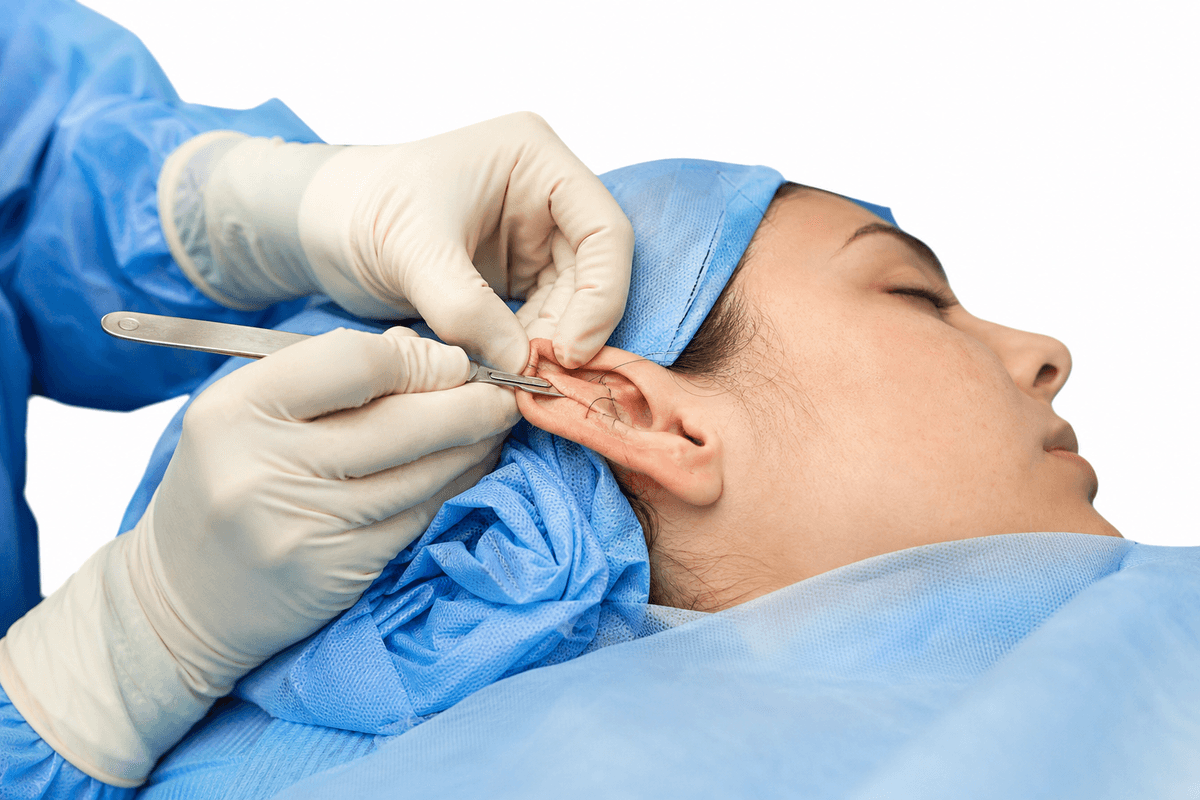
Performed by Dr. M. Madhusudhan at Dr Madhusudhan
Otoplasty in Bahrain and Hyderabad is a surgical procedure that reshapes and repositions prominent, protruding, or misshapen ears to create a more natural, balanced appearance. It is commonly performed on children from around age 5 as well as teenagers and adults, using a discreet incision hidden behind the ear. Dr M. Madhusudhan, an experienced plastic surgeon, provides personalised otoplasty tailored to each patient's ear anatomy and goals.
We believe in honest, upfront disclosure so you can make an informed decision.
A step-by-step look at what happens during this procedure.
Otoplasty is performed under general anaesthesia for children and under local anaesthesia with sedation for most adults. The chosen method keeps the patient comfortable and pain-free, and vital signs are monitored closely throughout the procedure.
An incision is made in the natural crease behind the ear to expose the cartilage while keeping any scar discreet. Where needed, small additional incisions within the natural folds allow access to the front of the cartilage.
The ear cartilage is carefully reshaped, folded, or trimmed to recreate the natural contours of the ear and reduce prominence. This step corrects absent or underdeveloped folds and refines the overall structure of the ear.
The reshaped ear is repositioned closer to the head and held in place with permanent internal sutures. Both ears are compared throughout to achieve balanced, symmetrical positioning.
The incisions are closed with fine sutures, and a supportive dressing or head bandage is applied. This protects the ears, controls swelling, and helps maintain their new position during the early stages of healing.
A structured, patient-first approach from first consultation to full recovery.
Dr Madhusudhan carefully examines the shape, size, and position of the ears, discusses the concerns of the patient or parents, and creates a customised surgical plan. He explains the procedure, the choice of anaesthesia, and expected outcomes to ensure the family feels fully informed and confident.
Using refined cartilage-sculpting and suture techniques, Dr Madhusudhan reshapes and repositions the ears while preserving natural contours. His meticulous approach focuses on achieving symmetrical, natural-looking results with a well-hidden incision behind the ear.
Throughout the procedure, Dr Madhusudhan follows strict safety protocols including sterile technique, careful handling of the delicate ear cartilage, and appropriate anaesthesia tailored to the patient's age. Modern equipment and monitoring ensure the highest standards of patient safety.
Dr Madhusudhan provides detailed instructions on dressing care, headband use, and activity restrictions, and schedules regular follow-up appointments to monitor healing. His team remains available to answer any questions from patients or parents during the recovery period.
What to expect at each stage of your recovery journey.
A supportive dressing or bandage is worn around the head continuously to protect and support the ears. You may experience mild discomfort, swelling, and bruising, which are managed with prescribed pain relief. Rest is encouraged, and the ears should be kept clean and dry. Strenuous activity and any pressure on the ears must be avoided during this phase.
The bulky dressing is usually replaced by a lighter protective headband, often worn at night. Most children return to school and adults return to work within one to two weeks. Swelling and bruising gradually subside. Contact sports, swimming, and activities that risk knocking the ears should still be avoided.
The protective headband is typically worn at night for several more weeks as advised by Dr Madhusudhan. Residual swelling continues to settle and the final shape of the ears becomes apparent. Most normal activities, including sport, can be resumed after about six weeks once healing is confirmed at follow-up.
Reshaping and repositioning the ear cartilage brings prominent or protruding ears closer to the head for a more natural, balanced appearance. The result is proportionate ears that harmonise with the overall shape of the face.
Otoplasty can refine misshapen, constricted, or shell ears by recreating the natural folds and contours of the ear. This produces a smoother, more defined ear structure that looks natural from every angle.
Correcting the appearance of the ears often relieves long-standing self-consciousness, teasing, or embarrassment, especially in children and teenagers. Patients frequently feel more comfortable with hairstyles that expose the ears and in social situations.
Because the cartilage is reshaped and secured in its new position, otoplasty results are generally permanent. Once healed, the ears retain their improved shape and position for many years.
Let's clear up some of the most common myths about otoplasty.
Get a personalised assessment from an experienced specialist. Understand your options, ask your questions, and decide with confidence.
Consult M. Madhusudhan for Otoplasty at any of these 2 centres — pick the one nearest you.